testing all
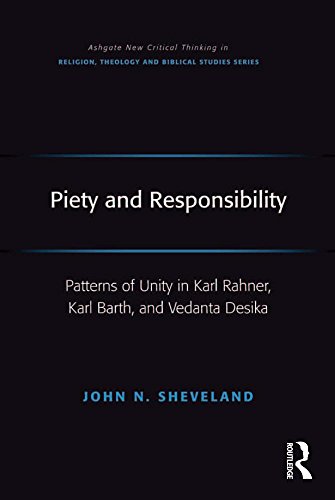
Amazon cover image
Image from Amazon.com

Piety and Responsibility Patterns of Unity in Karl Rahner, Karl Barth, and Vedanta Desika

By: Language: English Publication details: Oxford Routledge 20160422Edition: 1Description: 224 pISBN:
  • 9781317080923
Summary: This book analyzes the writings of Karl Rahner, Karl Barth, and Vedanta Desika to disclose how each construes "piety" and "responsibility" as integral to each other. Each theologian expresses a fundamental unity of love of God and love of neighbour. Sheveland explores this unity in ecumenical and interreligious frameworks, showing how these authors privilege theology as practice, enactment, or simply as ethical. He uses the Renaissance genre of musical polyphony as a methodological tool by which to explore the aesthetic quality and the similarity-in-difference of the theological voices being compared. Polyphony's application to comparative theology includes the avoidance of caricature, domestication, and antagonism. In place of these is offered a fundamentally aesthetic paradigm by which to hear theological voices in terms of their unity-in-distinction.
Item type:
Tags from this library: No tags from this library for this title. Log in to add tags.
Star ratings
    Average rating: 0.0 (0 votes)
No physical items for this record

This book analyzes the writings of Karl Rahner, Karl Barth, and Vedanta Desika to disclose how each construes "piety" and "responsibility" as integral to each other. Each theologian expresses a fundamental unity of love of God and love of neighbour. Sheveland explores this unity in ecumenical and interreligious frameworks, showing how these authors privilege theology as practice, enactment, or simply as ethical. He uses the Renaissance genre of musical polyphony as a methodological tool by which to explore the aesthetic quality and the similarity-in-difference of the theological voices being compared. Polyphony's application to comparative theology includes the avoidance of caricature, domestication, and antagonism. In place of these is offered a fundamentally aesthetic paradigm by which to hear theological voices in terms of their unity-in-distinction.

There are no comments on this title.

to post a comment.