testing all
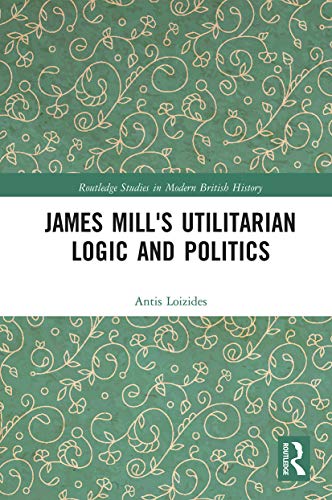
Amazon cover image
Image from Amazon.com

James Mill's Utilitarian Logic and Politics

By: Language: English Publication details: Oxford Routledge 20210331Edition: 1Description: 254 pISBN:
  • 9780367786588
Summary: James Mill’s (1773–1836) role in the development of utilitarian thought in the nineteenth century has been overshadowed both by John Stuart Mill (1806–1873) and by Jeremy Bentham (1748–1832). Of the three, the elder Mill is considered to be the least original and with the least important, if any, contributions to utilitarian theory. True as this statement may be, even those who have tried to challenge some of its aspects take the common portrayal of Mill – "the rationalist, the maker of syllogisms, the geometrician" – as given. This book does not. Studying James Mill’s background has surprising results with reference to influences outside the Benthamite tradition as well as unexpected implications for his contributions to debates of his time. The book focuses on his political ideas, the ways in which he communicated them and the ways in which he formed them in an attempt to reveal a portrait of Mill unencumbered from the legacy of Thomas Babington Macaulay’s (1800–1859) brilliant essay "Utilitarian Logic and Politics".
Item type:
Tags from this library: No tags from this library for this title. Log in to add tags.
Star ratings
    Average rating: 0.0 (0 votes)
No physical items for this record

James Mill’s (1773–1836) role in the development of utilitarian thought in the nineteenth century has been overshadowed both by John Stuart Mill (1806–1873) and by Jeremy Bentham (1748–1832). Of the three, the elder Mill is considered to be the least original and with the least important, if any, contributions to utilitarian theory. True as this statement may be, even those who have tried to challenge some of its aspects take the common portrayal of Mill – "the rationalist, the maker of syllogisms, the geometrician" – as given. This book does not. Studying James Mill’s background has surprising results with reference to influences outside the Benthamite tradition as well as unexpected implications for his contributions to debates of his time. The book focuses on his political ideas, the ways in which he communicated them and the ways in which he formed them in an attempt to reveal a portrait of Mill unencumbered from the legacy of Thomas Babington Macaulay’s (1800–1859) brilliant essay "Utilitarian Logic and Politics".

There are no comments on this title.

to post a comment.