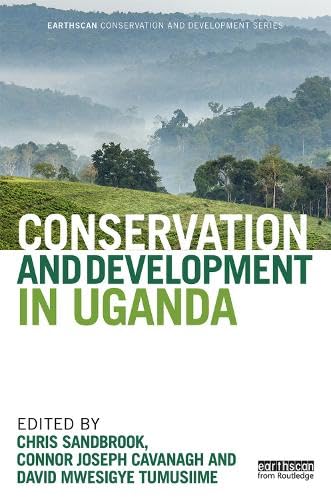
Amazon cover image
Image from Amazon.com

Conservation and Development in Uganda

By: Contributor(s): Language: English Publication details: Oxford Routledge 20180921Edition: 1Description: 296 pISBN:
  • 9781351779357
Summary: Uganda has extensive protected areas and iconic wildlife (including mountain gorillas), which exist within a complex social and political environment. In recent years Uganda has been seen as a test bed and model case study for numerous and varied approaches to address complex and connected conservation and development challenges. This volume reviews and assesses these initiatives, collecting new research and analyses both from emerging scholars and well-established academics in Uganda and around the globe. Approaches covered range from community-based conservation to the more recent proliferation of neoliberalised interventions based on markets and payments for ecosystem services. Drawing on insights from political ecology, human geography, institutional economics, and environmental science, the authors explore the challenges of operationalising truly sustainable forms of development in a country whose recent history is characterised by a highly volatile governance and development context. They highlight the stakes for vulnerable human populations in relation to of large and growing socioeconomic inequalities, as well as for Uganda’s rich, unique, and globally significant biodiversity. They illustrate the conflicts that occur between competing claims of conservation, agriculture, tourism, and the energy and mining industries. Crucially, the book draws out lessons that can be learned from the Ugandan experience for conservation and development practitioners and scholars around the world.
Item type:
Tags from this library: No tags from this library for this title. Log in to add tags.
Star ratings
    Average rating: 0.0 (0 votes)
No physical items for this record

Uganda has extensive protected areas and iconic wildlife (including mountain gorillas), which exist within a complex social and political environment. In recent years Uganda has been seen as a test bed and model case study for numerous and varied approaches to address complex and connected conservation and development challenges. This volume reviews and assesses these initiatives, collecting new research and analyses both from emerging scholars and well-established academics in Uganda and around the globe. Approaches covered range from community-based conservation to the more recent proliferation of neoliberalised interventions based on markets and payments for ecosystem services. Drawing on insights from political ecology, human geography, institutional economics, and environmental science, the authors explore the challenges of operationalising truly sustainable forms of development in a country whose recent history is characterised by a highly volatile governance and development context. They highlight the stakes for vulnerable human populations in relation to of large and growing socioeconomic inequalities, as well as for Uganda’s rich, unique, and globally significant biodiversity. They illustrate the conflicts that occur between competing claims of conservation, agriculture, tourism, and the energy and mining industries. Crucially, the book draws out lessons that can be learned from the Ugandan experience for conservation and development practitioners and scholars around the world.

There are no comments on this title.

to post a comment.