testing all
Amazon cover image
Image from Amazon.com

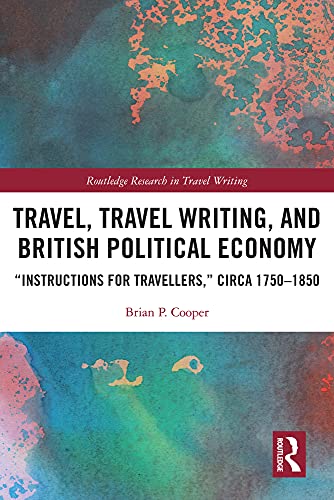
Travel, Travel Writing, and British Political Economy “Instructions for Travellers,” circa 1750–1850

By: Language: English Publication details: Oxford Routledge 20211110Edition: 1Description: 374 pISBN:
  • 9781317698029
Summary: The book draws on the history of economics, literary theory, and the history of science to explore how European travelers like Alexander von Humboldt and their readers, circa 1750–1850, adapted the work of British political economists, such as Adam Smith, to help organize their observations, and, in turn, how political economists used travelers’ observations in their own analyses. Cooper examines journals, letters, books, art, and critical reviews to cast in sharp relief questions raised about political economy by contemporaries over the status of facts and evidence, whether its principles admitted of universal application, and the determination of wealth, value, and happiness in different societies. Travelers citing T.R. Malthus’s population principle blurred the gendered boundaries between domestic economy and British political economy, as embodied in the idealized subjects: domestic woman and economic man. The book opens new realms in the histories of science in its analyses of debates about gender in social scientific observation: Maria Edgeworth, Maria Graham, and Harriet Martineau observe a role associated with women and methodically interpret what they observe, an act reserved, in theory, by men.
Item type:
Tags from this library: No tags from this library for this title. Log in to add tags.
Star ratings
    Average rating: 0.0 (0 votes)
No physical items for this record

The book draws on the history of economics, literary theory, and the history of science to explore how European travelers like Alexander von Humboldt and their readers, circa 1750–1850, adapted the work of British political economists, such as Adam Smith, to help organize their observations, and, in turn, how political economists used travelers’ observations in their own analyses. Cooper examines journals, letters, books, art, and critical reviews to cast in sharp relief questions raised about political economy by contemporaries over the status of facts and evidence, whether its principles admitted of universal application, and the determination of wealth, value, and happiness in different societies. Travelers citing T.R. Malthus’s population principle blurred the gendered boundaries between domestic economy and British political economy, as embodied in the idealized subjects: domestic woman and economic man. The book opens new realms in the histories of science in its analyses of debates about gender in social scientific observation: Maria Edgeworth, Maria Graham, and Harriet Martineau observe a role associated with women and methodically interpret what they observe, an act reserved, in theory, by men.

There are no comments on this title.

to post a comment.