testing all
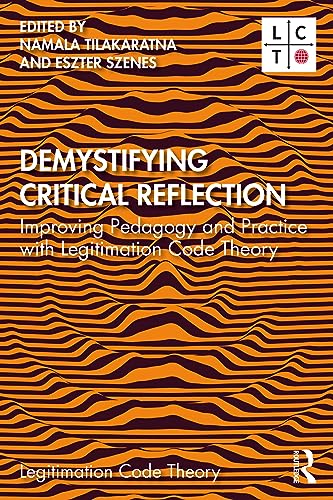
Amazon cover image
Image from Amazon.com

Demystifying Critical Reflection Improving Pedagogy and Practice with Legitimation Code Theory

By: Contributor(s): Language: English Publication details: Oxford Routledge 20240124Edition: 1Description: 252 pISBN:
  • 9781032011158
Summary: Drawing on Legitimation Code Theory (LCT), this volume reveals the knowledge practices and language of critical reflection in a range of different subjects, making clear how it can be taught and learned. Critical thinking is widely held to be a key attribute required for successfully living, learning and earning in modern societies. Universities now list critical thinking as a key graduate quality and use ‘critical reflection’ as a way of teaching students how to become reflective and ethical professionals. Yet, what ‘critical reflection’ actually involves remains vague in research, teaching practice, and assessment. Studies draw on LCT, a fast-growing framework for revealing the knowledge practices that enable educational success and the individual chapters focus on a diverse range of contexts across the disciplinary map, including education, science, arts, sociology and nursing. The book further connects research and practice by presenting in-depth analyses of critical reflection and providing practical insights into how LCT can be used to design pedagogic interventions. The book offers a rich resource for both scholars and teachers who want to demystify critical reflection and prepare university students for the modern workplace.
Item type:
Tags from this library: No tags from this library for this title. Log in to add tags.
Star ratings
    Average rating: 0.0 (0 votes)
No physical items for this record

Drawing on Legitimation Code Theory (LCT), this volume reveals the knowledge practices and language of critical reflection in a range of different subjects, making clear how it can be taught and learned. Critical thinking is widely held to be a key attribute required for successfully living, learning and earning in modern societies. Universities now list critical thinking as a key graduate quality and use ‘critical reflection’ as a way of teaching students how to become reflective and ethical professionals. Yet, what ‘critical reflection’ actually involves remains vague in research, teaching practice, and assessment. Studies draw on LCT, a fast-growing framework for revealing the knowledge practices that enable educational success and the individual chapters focus on a diverse range of contexts across the disciplinary map, including education, science, arts, sociology and nursing. The book further connects research and practice by presenting in-depth analyses of critical reflection and providing practical insights into how LCT can be used to design pedagogic interventions. The book offers a rich resource for both scholars and teachers who want to demystify critical reflection and prepare university students for the modern workplace.

There are no comments on this title.

to post a comment.